
I am grateful to have received many pieces of impactful advice from individuals I respect. One such individual is my friend Ace.
I met Ace at Imperial College London during his masters studies and as time went on, I quickly became familiar with his insatiable curiosity. Whenever and wherever I would see him, he would be reading a new book on anything from philosophy and history to sociology and neuroscience. And, like me, he was a computer science student.
This curiosity, paired with hard work and dedication, has served him well. After A-Levels, he worked as a software engineer for four years before deciding to study a Computer Science undergraduate degree at the age of 22. Upon graduating, he read MSc Computer Science at Imperial (where I met him), specialising in Artificial Intelligence and Machine Learning. While most people I know would stop there, he then pursued another masters degree, reading MRes Biosciences at UCL. Armed with three degrees, he had his sights set on the field of biogerentology (the biology of ageing and age-related diseases). At the time of writing this article, he is two years into his four year PhD program at the University of Oxford, working on AI Drug Discovery in biogerentology studies.
It is safe to say that Ace has built an impressive resume.
Behind this impressive resume was an even more impressive journey; one with many turns, pivots and big decisions. How did he build the courage to take these leaps, whether it be to pursue higher education after employment or to pivot into different industries?
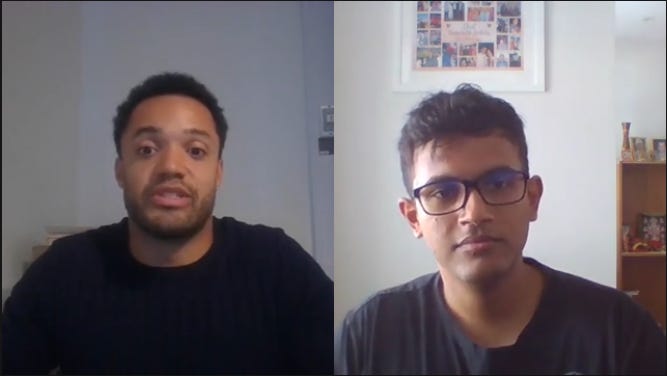
To get answers, I interviewed him on my podcast The Generalist’s Dilemma- a podcast that explores how an adult can freely pursue multiple passions in a world where we are told to specialise. The full episode can be found here. Out of all the things we spoke about, his answer to my last question is something that has stuck with me ever since.
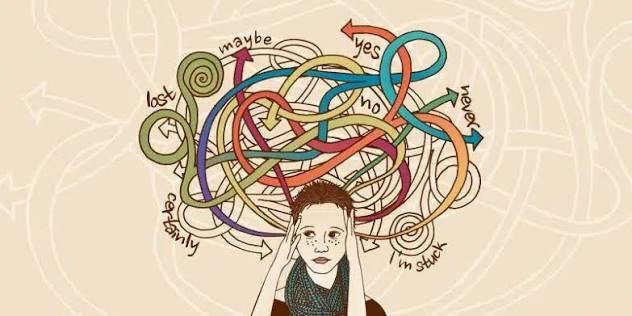
RS: I struggle with making a certain decision in the midst of other decisions I could make instead. Even if I think I would like to pivot or make a step, there are always other things I could be doing instead. This puts me in decision paralysis where I am scared to make a step because I am not sure if it is the right one amongst all the other steps I could make. What advice would you give to someone who suffers from this decision paralysis?
AB: I would say that for me, the only thing that scares me more than making a misstep and going down the wrong path is stasis. If I am having these thoughts, I am not perfectly happy with the thing I am doing now and I want to explore something else. If I have three or four options in front of me, I would rather iterate and find out really quickly that the thing I chose was wrong than spend years of my life fretting about which decision to make. In the time that I spent fretting about “I could have done this, I could have done that”, you could have made the wrong decision, found out it was the wrong decision and pivoted to something else.
Ace’s advice is akin to something that we may have been told before - you will never know until you try.
As a standalone statement, I find this pretty hard to dispute. One could do some research surrounding a pending decision. They could meticulously plan. They could even tell other people about the decision. But nothing is more educational than making the decision and learning from its consequences.
And yet, many of us have felt decision paralysis before, where the decision in question is anything but simple to make. No matter whether it is big or small, I have found that there are two reasons for this.
The pros and cons of each option are at odds with each other. Neither will magically go away and they seem just as important as each other.
The consequences of the decision you make are not completely known. This uncertainty is particularly uncomfortable when making the wrong decision could be costly.
For me, the discomfort of decision paralysis comes from trying to find concrete solutions to these two things. I convince myself that more information or deeper reflection is all I need to make objective sense of the pros and cons. I try to become certain about what the future will hold, even if the future is inherently uncertain.
This is not to say that understanding the pros and cons and resolving relevant uncertainties is not important. In fact, it is a necessary part of any decision making process. But when does the pursuit of understanding and absolute certainty become detrimental instead of beneficial? And how do you strike the right balance when the stakes are high?
The secret to not reaching decision paralysis is accepting that its causes are not things that can be completely solved. But that, on its, does not make every decision suddenly easy to make. Here are a few things I keep in mind when making decisions to prevent overthinking.
How reversible is the decision?
It is hard to accept that the causes of decision paralysis (unwavering conflict between the pros and cons and uncertainty in the consequences) do not have complete solutions when the stakes of the decision seem high. On the flip side, when a decision has low stakes, it is easier to escape decision paralysis and make a choice.
Take the choice of which restaurant to go to for dinner. There may be conflicting pros and cons for each option (time to get there, cost, etc) and you will not truly know if you made the right decision until you eat at the restaurant you chose. However, these two things are somewhat easy to grapple with because what is the worst that can happen? More often than not, you will choose a restaurant and get on with the evening.
If how high or low the stakes are impacts our chances of falling into decision paralysis, it is worth getting an accurate view of these stakes. There are decisions that are clearly insignificant / low-stakes (choosing which restaurant to go to). There are also decisions that are clearly very significant / high-stakes (something that would impact your ability to provide for your family). But then you have some decisions where its significance is harder to gauge (leaving your job or pursuing higher education).
In these cases, a question I have found to be helpful is to consider how reversible the decision is. If you make a decision and it does not go well, how easy is it either to go back on the decision or change it at little or no cost?
More decisions are reversible than we initially think. Leaving your current job and pivoting to another role may seem like high stakes until you realise that it is possible to go back to your current job (or something similar) if you discover that the new role is not what you expected.
Understanding that a decision is reversible can ease the pressure of making the right one.
When to think and when to act
While overthinking can leave you feeling paralysed, thinking before acting is, of course, beneficial. Decisions, particularly impactful ones, should be taken with intention. But when does thinking become overthinking?
The essence of this question is striking the subtle balance between gathering information and taking action once you are informed enough to make the decision.
The best framework I have found to strike this balance comes from the book “80,000 Hours - Find a Fulfilling Career That Does Good”. Despite this advice being intended for career-related decisions, I think the same message is applicable outside of that.
Imagine the decision making process is structured as the following:
Make a list of potential options.
Figure out the uncertainties with each option.
Perform cheap tests to resolve the uncertainties where possible. Reorder the list as necessary and iterate as new uncertainties arise.
When should you stop the research and act on an option? When the best option stops changing. If the order of your options stays the same as you research more, it is a sign that gathering more information is giving diminishing returns. It is unlikely that more research will change which option is best to pick for you.
This piece of advice highlights something important. There are, usually, ways to resolve some uncertainty associated with a decision. Reading articles. Talking to others who have been in the same situation. Experimenting with ideas to get feedback. Doing these things are important to make sure you are not flying completely blind. But you can’t resolve all uncertainty. The key to accepting this is identifying when you are informed enough.
If reordering options on a page does not suit you, how can you identify the feeling of being informed enough? Some signs I have noticed of this feeling are:
Using the same words to say the same answer to anyone who asks about the decision to be made
Being reminded of the same train of thought when getting another perspective or doing more research
Speaking as if the decision has been made
However it has been identified, realising that I am informed enough has installed a sense of faith that I am making the best decision at that current moment of time. That faith is something I can lean on even if the decision ends up being the wrong one.
What makes decision making so hard is how unique the process is to the decision maker.
Advice that other people give may not resonate with your individual situation. In fact, it is still difficult even when the advice does resonate with you. It may come from someone with experience, you may trust their opinion and their advice may be hard to logically dispute. But advice making sense, on its own, does not mean you will act. For it to inspire action, you also need to be ready for it to inspire you. Being ready requires you to have gone on your own journey to be in the right position at the right time.
Making decisions is also not an exact science and that only adds to the difficulty. This is something I have struggled with in the past. I fall into the trap of subconsciously trying to justify what the perfect decision is before making it. But if every decision was so black and white, I would not be as shaped by the consequences of them. I certainly would not learn as much. It probably would not be as fun.
As Ace would say, if making decisions cannot be done perfectly, I may as well make a decision and see if I am right or wrong. Besides- in the grand scheme of things, what makes a decision “right” or “wrong” anyway?